

Ines Koeltzsch Talk: Before World Fame: Commemorating Franz Kafka in 1920s Central Europe

Ines Koeltzsch
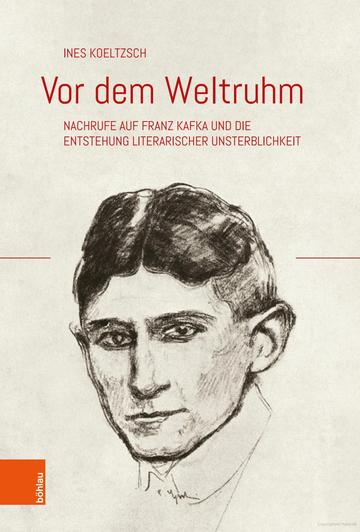
When Franz Kafka died in a sanatorium near Vienna in June 1924, he was neither prominent nor unknown. Despite the paucity of publications during his lifetime, Kafka’s death attracted tremendous attention, and the burst of articles and lectures about him surpassed anything he experienced while still alive. Where and how were Kafka and his work remembered in postimperial Central Europe, and what role did Jewish difference play in public forms of mourning? And who contributed to the various ways of commemoration that constituted the foundation of his world fame since the 1940s?
The lecture offers a new perspective on the early afterlife of Kafka and examines both the significance of the media (text, voice, image) and of intellectual networks and communities of remembrance across nation-state borders in creating the author’s legend. Although the question of belonging was raised in several texts, the attributions of Kafka as a German, Jewish, Zionist, Austrian or simply a Prague writer were as controversial as they were fragile in Central Europe after 1918.
Ines Koeltzsch is a visiting professor at the Jewish Studies Program at CEU Vienna and a research associate at the Vienna Wiesenthal Institute for Holocaust Studies. She is the author of the books Vor dem Weltruhm. Nachrufe auf Franz Kafka und die Begründung literarischer Unsterblichkeit (2024) and Geteilte Kulturen. Eine Geschichte der tschechisch-jüdisch-deutschen Beziehungen in Prag 1918–1938 (2012), and a co-author of two chapters in Prague and Beyond. Jews in the Bohemian Lands (ed. by Čapková/Kieval, University of Pennsylvania Press 2021). Her research interests include the modern history of Jewish/non-Jewish relations, migration and flight, as well as literary representations of contemporary history in Central and East Central Europe.
This lecture will be delivered in hybrid format (in person at the Taylor Institution Library, Oxford and online via Microsoft Teams). Attendance is free and booking is advised but not essential.
Book here to attend in person: Before World Fame: Commemorating Franz Kafka in 1920s Central Europe (In-person attendance) | University of Oxford
Join online: Microsoft Virtual Events Powered by Teams

